
Project: AIHandSizer
Focus: Artificial intelligence · Assistive technology · 3D printing
Student: Kiyan Yaghnam, Year 11
The challenge
Upper-limb loss affects millions of children worldwide, with the largest access gap in low-resource and humanitarian settings. Children who use prosthetic hands often outgrow them, making regular replacements costly and difficult to access, especially in contexts where resources are limited.
I’m developing AIHandSizer, a tool that uses machine learning to estimate hand size from a photograph. The aim is to make prosthetic sizing faster and simpler, helping correctly sized, 3D-printed hands reach the people who need them.
How it works
The system uses a standard card in the photograph as a reference for scale. My model identifies the card, calculates the image’s pixel-to-millimetre ratio, and measures the hand. These measurements are then used to recommend an appropriate prosthetic size.
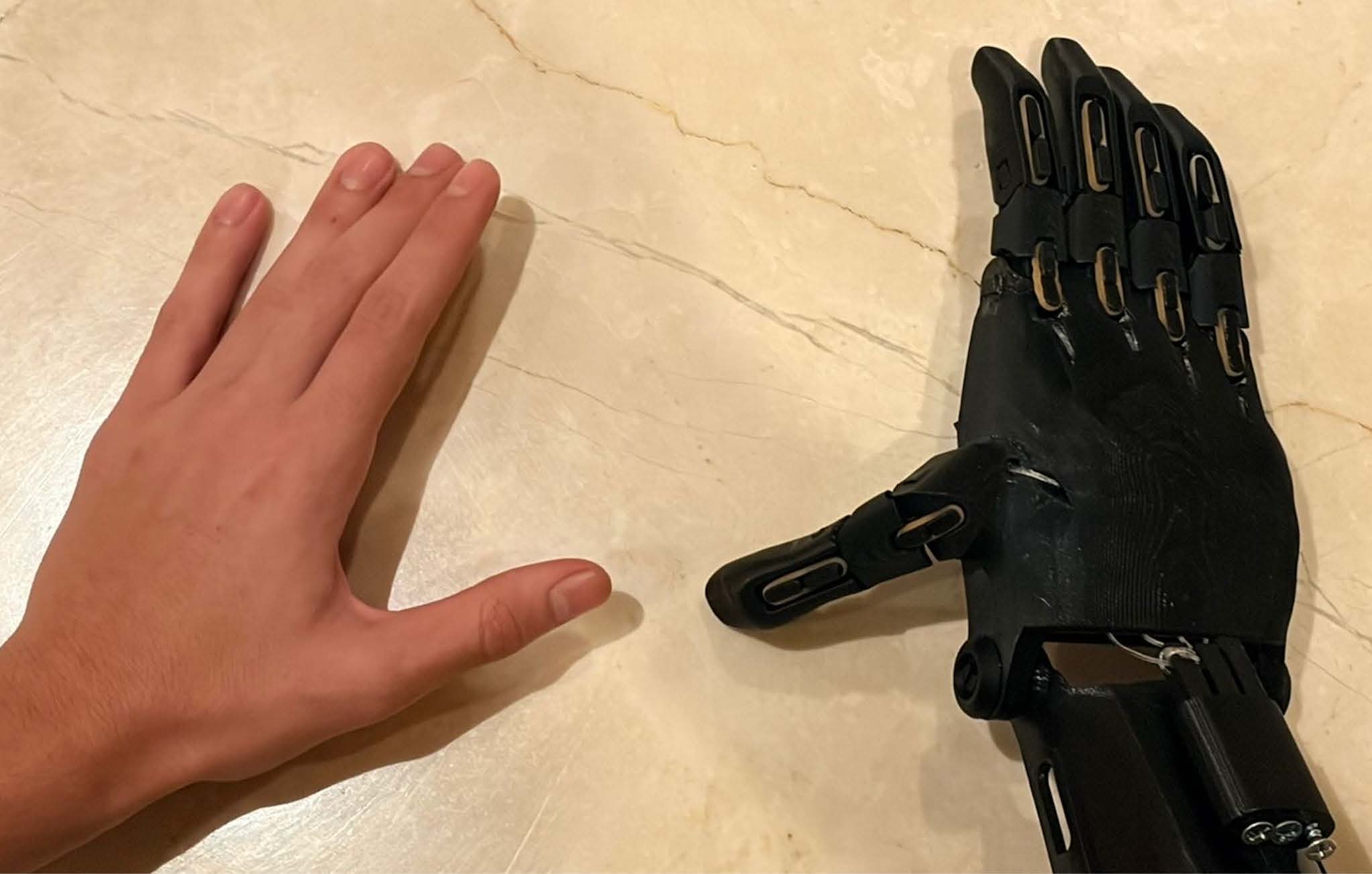
Image 1: A real hand alongside a 3D-printed Phoenix V3 prosthetic hand sized using AIHandSizer.

Image 2: The hand-sizing workflow, from photograph to recommended prosthetic size.
What I’m working on
I’m currently improving the model’s measurement accuracy and integrating it into a simple sizing app. Reliable predictions are essential if the tool is to support practical prosthetic fitting.
How you can help
To help improve the model, I’m collecting hand images from a wide range of people. A more diverse dataset can help me assess how well the system performs across different hand sizes.
The more samples I have, the better. So if you too want to make a tangible difference in accessible healthcare, please fill out the hand sizing survey below.
All submissions are encouraged. Every image helps improve the accuracy and inclusivity of the model.
What’s next?
My next steps are to improve the model’s accuracy and continue developing the sizing app. The long-term goal is to make the process of sizing 3D-printed prosthetic hands more efficient and accessible for people who need them.